Reliable, Always-On Energy Is Driving a New Era of Decarbonization
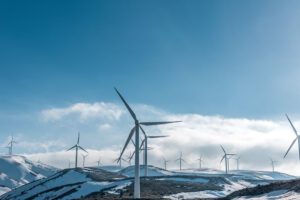
When businesses talk about carbon-free electricity, solar and wind usually come to mind. But as companies push beyond basic ESG compliance toward 24/7 decarbonization, they’re beginning to face a tough truth: most renewable energy is intermittent.
That’s why a growing number of organizations are turning to a clean energy source that’s constant, reliable, and emission-free—nuclear power.
Through Emission-Free Energy Certificates (EFECs), companies can now support carbon-free nuclear energy without touching infrastructure, contracts, or supply lines. In this blog, we’ll explore why nuclear is reentering the sustainability conversation—and why EFECs are the most direct path to accessing it.
The Intermittency Problem
Solar and wind are excellent resources, but they rely on the weather. That creates real challenges for businesses that:
- Operate 24/7 (e.g., manufacturing, hospitals, data centers)
- Can’t afford energy disruptions or storage gaps
- Are pursuing hourly carbon matching, not just annual offsets
When the sun isn’t shining or the wind isn’t blowing, the power still has to come from somewhere. And that “somewhere” is usually a fossil-fuel backup—undermining your zero-carbon goals.
The Case for Nuclear: 5 Reasons It’s Back in the Spotlight
✅ 1. 24/7 Baseload Power
Nuclear plants run constantly. They provide baseload electricity, meaning a steady output around the clock, regardless of weather or season.
This is critical for companies striving to match energy use with clean supply in real time—not just through annual accounting.
✅ 2. Zero Operational Emissions
Nuclear generates electricity without emitting carbon dioxide, methane, or particulates. It’s one of the most efficient and cleanest large-scale energy sources on the planet.
In fact, nuclear avoids more CO₂ emissions annually in the U.S. than all solar and wind combined.
✅ 3. Grid Stability and Resilience
As more intermittent renewables connect to the grid, there’s increasing pressure on reliability. Nuclear helps anchor grid stability, making it easier to integrate other clean energy sources without adding fossil backup.
✅ 4. Energy Independence
Unlike oil or gas, nuclear fuel is domestically sourced and tightly regulated, reducing exposure to global price shocks or supply volatility.
✅ 5. Public and Private Sector Investment
Governments around the world are expanding their support for nuclear, including small modular reactors (SMRs) and next-gen technologies. Corporations like Google, Microsoft, and Amazon have publicly backed nuclear’s role in reaching net-zero.
What Are EFECs and How Do They Support Nuclear?
An Emission-Free Energy Certificate (EFEC) represents 1 megawatt-hour of electricity generated from a zero-carbon source, primarily nuclear or hydro. When your business purchases and retires EFECs, you’re claiming the environmental attributes of that clean power.
You don’t need to be physically connected to a nuclear plant or sign a special contract. EFECs decouple energy use from geography, making nuclear accessible through simple, verified certificates.
Who’s Using EFECs?
✅ Hospitals seeking around-the-clock carbon-free electricity
✅ Data centers aligning with 24/7 emissions tracking
✅ Manufacturers offsetting high loads from machinery and HVAC
✅ Banks and financial firms under pressure to decarbonize their footprints without operational risk
Real-World Example: A Data-Intensive Business Goes Nuclear
A national insurance company ran data centers 24/7 but found that solar-backed RECs couldn’t align with their load profile.
Their solution:
- Purchased EFECs tied to nuclear generation
- Retired certificates monthly
- Matched 100% of usage with zero-emission power
- Reported full Scope 2 reduction in their ESG filing
Bonus: They saved 18% vs. their previous renewable mix.
The Bottom Line: If You Need Reliable Carbon-Free Power, Nuclear + EFECs Are Your Answer
Whether you’re looking for cost savings, ESG improvement, or operational stability, EFECs linked to nuclear offer a scalable, affordable, and verifiable path to zero-carbon electricity.
And unlike PPAs or on-site solar, there’s no construction, no long-term contract, and no disruption.
Want to Explore a Nuclear-Backed EFEC Strategy?
📘 Download our eBook, “Achieve Carbon Neutrality with Ease – Explore EFECs”
📧 info@mybrilliantsource.com
📞 1-866-603-1462