Cleaner, renewable energy options are helping to build a greener economy. On the surface, the efforts to work towards sustainability and utilization of more green power seem to be beneficial for all, but is that really the case?
The early adopters of clean energy were individuals who had the means to afford the hefty price tag. While prices have since lowered, making it more accessible to many, low-income households are still left out of the opportunity. Considering the current systemic inequalities that come with energy prices and consumption is crucial to building a green economy that will work for everyone.
Energy Inequality
Let’s start with the current programs in place and why they are not working for low-income households. Many low-income individuals are not homeowners, but rather renters. This creates a problem for two reasons. First, this means that they cannot access state and federal programs such as green energy homeowner tax credits and retrofit programs. Many government programs also require high credit scores, checking accounts, and upfront payment, which also may not be attainable to low-income individuals. Along with not being able to access programs, their landlords are also not implementing these clean energy sources in their rental properties.
Low-income households are also disproportionately affected by increases in energy prices. Many low-income households are facing higher energy usage due to the fact that their homes may have less insulation, or less efficient appliances and lighting. These combining factors put them at risk of energy insecurity. People are having to choose between their energy bills and other necessities.
So, what’s President Biden’s plan?
President Biden is proposing a $2 trillion infrastructure package called the American Jobs Plan in fiscal year 2022. Part of this bill is expected to go toward sustainability initiatives in low-income housing areas, titled The Moving Forward Act. These initiatives include expanding the low-income housing credit, $100 billion in broadband investments, and creating a Neighborhood Investment Tax Credit to subsidize development costs in order to encourage rehabilitation of vacant homes or construction of additional low-income housing.
While these initiatives may be a step in the right direction for some, it still does not fully address sustainability for low-income households living in rental properties. In order to provide sustainable solutions to low-income households, the government must consider how they are currently living and provide attainable solutions for those that are both homeowners and renters.
How to Move Forward
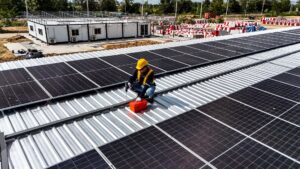
Community solar projects are helping to provide sustainability solutions for low-income households. For these projects, community solar companies are working to spread the cost of purchasing solar power over many households, and businesses, making it more attainable for all. Currently there are more than 2,000 community solar projects across 39 states. Some states have even passed community solar legislations. While the programs vary from state to state, on average they save low to moderate-income households 15% on their energy bills. This could be the future for providing equal clean energy for all.
Interested in sustainable solutions and clean energy? Contact us today!